
The Meaning of Rangoli & Why Cultural Art Still Matters Today

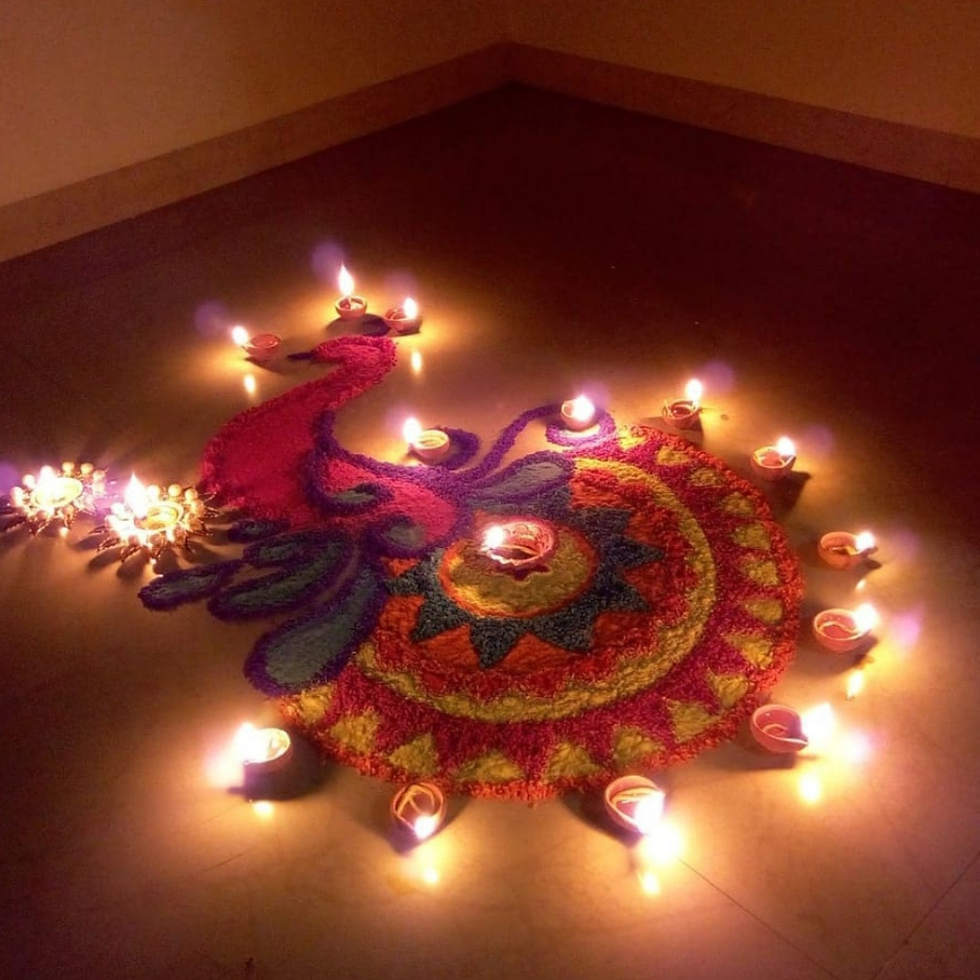
For many of us growing up in South Asian households, Rangoli was never just decoration.
It was ritual.
Celebration.
A quiet act of welcome and togetherness.
Whether created outside homes during Diwali or shared across family gatherings and festivals, Rangoli has always carried meaning beyond its patterns and colours.
At its heart, it represents positivity, joy, connection, and the coming together of community.
What I find especially beautiful about Rangoli is how temporary it is. It reminds us that art does not always have to be permanent to be meaningful. Sometimes the process of creating together is the experience itself.
Today, in increasingly fast-paced and digital spaces, cultural art forms like Rangoli continue to hold an important place — perhaps now more than ever.
They create opportunities for storytelling, curiosity, and shared experiences across different communities and generations. They allow culture to feel lived, interactive, and accessible rather than distant or performative.
Through StoryBeyondLines, I’ve loved seeing how people connect with Rangoli experiences in modern settings — from workplaces and museums to intimate gatherings and public workshops. What begins as creativity often opens conversations around identity, heritage, mindfulness, and human connection.
For me, cultural experiences are not simply about preserving tradition. They are about creating spaces where people can engage with culture in thoughtful, meaningful, and contemporary ways.
Because art has always had the power to bring people together — across stories, backgrounds, and experiences.


Comments